Elypta reports the primary endpoint results from Cohort 2 of AURORAX-0087A (AUR87A), a prospective, multicentre, observational study evaluating a urine glycosaminoglycan (GAG) based test for monitoring for recurrence following curative-intent surgery in patients with non-metastatic clear cell renal cell carcinoma (ccRCC).
The test configuration evaluated in this study did not meet the prespecified criteria for clinical validation for this intended use.
The primary analysis included 143 evaluable participants at their last study visit, of whom 31 had a radiologically confirmed recurrence, corresponding to an observed recurrence prevalence of 21.7%. Radiological recurrence was observed in 22.6% of participants with a Positive test result and 18.9% of those with a Negative test result. The median follow-up time of the study was 16.2 months.

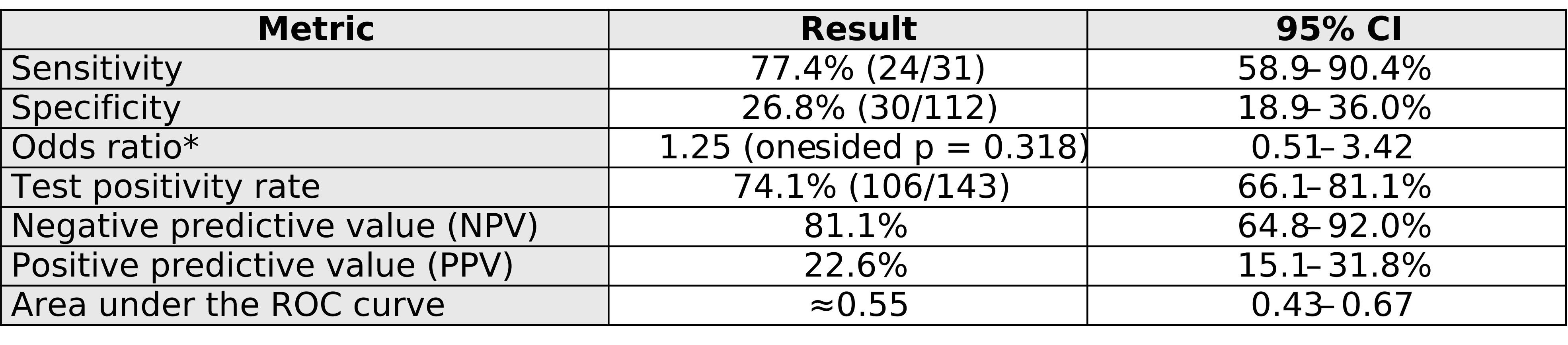
All prespecified secondary endpoints were analysed and were consistent with the primary endpoint result; none supported clinical performance. A contracted external biostatistics team performed the primary analysis according to the prespecified statistical analysis plan. A technical and analytical review covering assay quality control, sample evaluability, re-run rates and analyte distributions across cohorts did not identify a technical or analytical factor that explained the outcome.
AUR87A comprised two cohorts. Cohort 1 was used for test development, including establishment of the GAG score algorithm and cutoff. Cohort 2 was an independent clinical validation cohort in which the locked algorithm, based on three chondroitin sulfate disaccharides as analytical inputs and a predefined cutoff, was evaluated against radiologically confirmed recurrence.
The Cohort 1 performance results were not confirmed in Cohort 2. Previously reported Cohort 1 results included a sensitivity of 90% and a negative predictive value of 97%. These remain the results observed in Cohort 1 and do not constitute independently validated clinical performance. The previously communicated potential to reduce surveillance imaging based on the Cohort 1 findings is not supported by the current evidence from Cohort 2. As such, it does not support a regulatory submission of the investigational test configuration for this intended use, and any previously communicated expectation of a regulatory filing for this configuration is withdrawn. Elypta is evaluating next steps for the RCC recurrence programme, and any future modified algorithm, cutoff or test configuration requires independent validation before clinical performance claims can be established. Plasma was not analysed for this endpoint.
The full Cohort 2 results will be submitted for peer-reviewed publication.
Elypta thanks all patients, study investigators, clinical sites and study collaborators whose contributions made AUR87A possible.
These findings apply only to the locked algorithm and cutoff evaluated in AUR87A Cohort 2 for recurrence in non-metastatic clear cell renal cell carcinoma, where that configuration did not show the required clinical performance. The study does not establish or refute the performance of other GAG-based algorithms, test configurations, sample types or cancer indications, each of which will require its own validation. The locked Cohort 2 configuration was based on three chondroitin sulfate disaccharides as analytical inputs, whereas earlier GAG test configurations used a broader 17-analyte panel. Elypta's other GAG programmes continue on their own development and validation paths unaffected by these results.
AURORAX-0087A (AUR87A) was a prospective, multicentre, observational diagnostic test cohort study evaluating a GAG-based test for surveillance of recurrence following curative-intent surgery in patients with non-metastatic clear cell renal cell carcinoma (ccRCC).
AUR87A is registered at ClinicalTrials.gov (NCT04006405). AUR87A was initiated within the AURORAX project, which received funding from the European Union's Horizon 2020 research and innovation programme.

.svg)


ISO 13485:2016 certified for Design, development and manufacture of in vitro diagnostic test kits and software for the measurement and interpretation of glycosaminoglycans (GAGs) in human biofluids


